
A gas furnace should be serviced once a year, before heating season. Efficiency isn't really the reason, although it helps. A yearly service is the chance to find a cracked heat exchanger or a venting issue before it turns into a carbon monoxide problem, and the CDC advises having heating systems serviced by a qualified technician every year for exactly that reason.
The rest of this page covers what a proper tune-up actually includes, what it should cost, and how to tell whether you got one.
How often should a furnace be serviced?
Once a year for a gas furnace, ideally in early fall before the first cold snap. Once a year for an oil furnace too, though oil needs more done to it. An air conditioner wants its own visit in spring. Booking in the quiet months gets you a choice of appointment rather than a wait, which is not what happens if you call in the middle of a cold week in January.
There are two practical reasons to go early.
Contractors get busy. From the first hard freeze onward, no-heat calls come first. A tune-up booked in September is a scheduled job. The same tune-up booked in December is competing with emergencies.
It only helps before the furnace is under load. Finding a failing ignitor in October is a scheduled appointment.
Finding it in January is a no-heat night.
What is included in a furnace tune-up?
A proper tune-up covers the burners, the flame sensor, the ignitor, the blower and its motor, the filter, the flue, the gas pressure, the safety controls and the heat exchanger. It should finish with a combustion and carbon monoxide check using an instrument, not a judgement by eye. Done thoroughly, that's usually the better part of an hour.
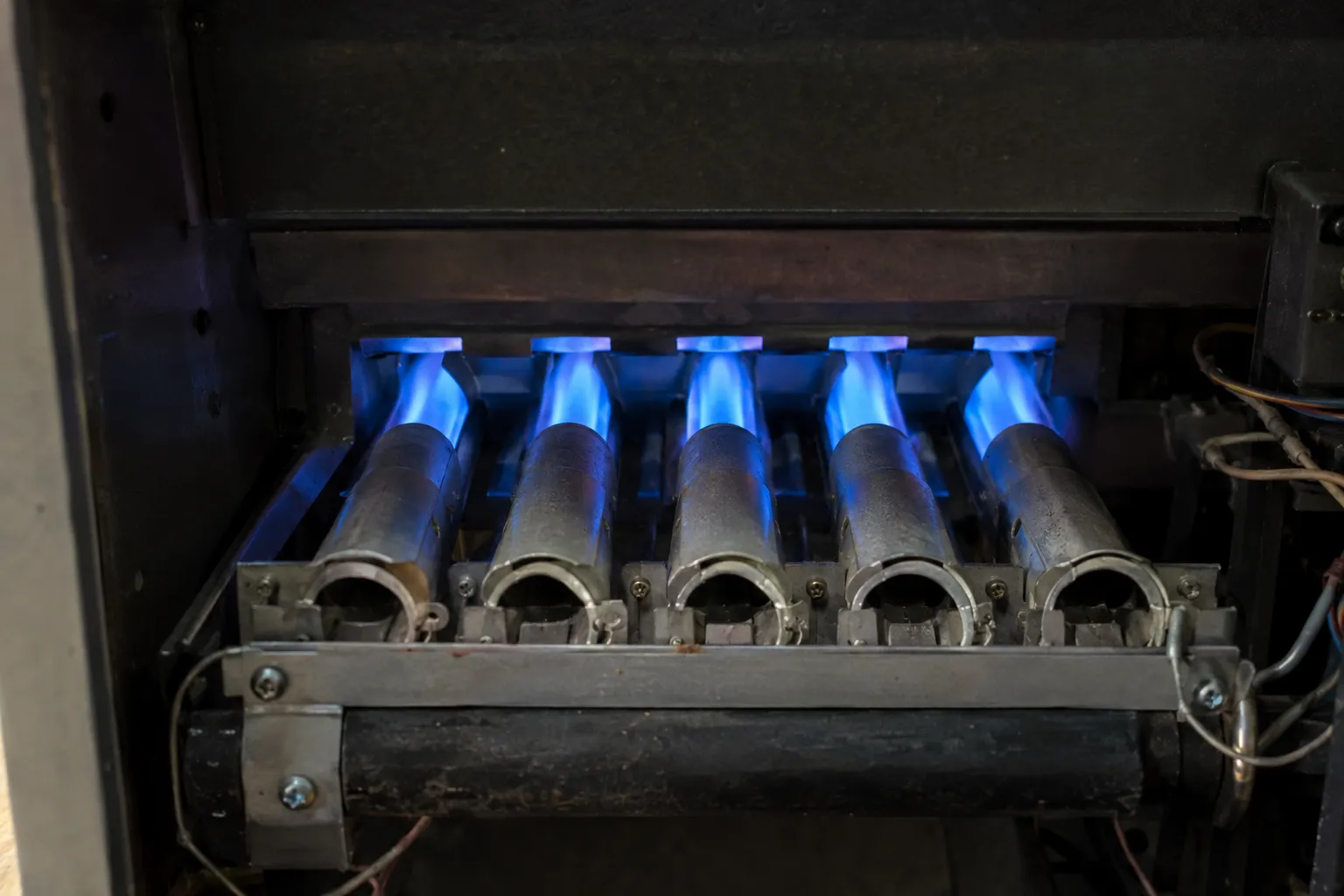
Here's what each part is for.
The burners and flame sensor. These get cleaned, because a dirty flame sensor is a common reason a furnace locks out mid-winter. Cleaning it is part of the visit you've already paid for. Replacing it in January is a call-out on top.
The blower and motor. Checked for dust build-up and amp draw. A blower wheel packed with dust moves less air, and that makes the furnace run hotter than it should.
The filter and airflow. The filter gets replaced or cleaned, and the return air gets checked. Restricted airflow is what shortens a heat exchanger's life, so this isn't a throwaway item.
The flue and venting. Inspected for blockages and for signs of combustion gases going the wrong way.
The heat exchanger. Inspected for cracks. This is the safety-critical one.
The combustion test. The tech puts a combustion analyzer on the flue to read what's actually coming out. It's the easiest item to leave out, and it's the one that turns an opinion into a measurement.
Does a furnace actually need maintenance, or is it a sales thing?
Honestly, both. Tune-ups are good business in a quiet month, and some of them are twenty minutes with a clipboard. But a yearly service on a gas furnace is still worth it, because of the heat exchanger, and because a cheap part caught early stays a cheap part instead of becoming an emergency.
Knowing that is how you make sure you get a real one.
Ask for the combustion readings. A technician with an analyzer will give you numbers. If they didn't bring one, they didn't test combustion.
Ask what they found, specifically. "Everything looks good" after fifteen minutes isn't an inspection. "Your flame sensor was coated, here it is, and your filter's due again in about three months" is.
Be wary of a tune-up that turns into a replacement quote. It happens, and sometimes it's honest, especially with a cracked heat exchanger. But if the visit was cheap and the quote is big, get a second opinion before you agree to anything.
What a tune-up costs in Fort Wayne
Three Fort Wayne contractors were advertising seasonal tune-ups between $49 and $90 in October 2026, against regular rates of $139 and $189 where those were stated. The low numbers are coupons, so they move with the season and they expire. Treat them as the shape of the market rather than a price you can hold anyone to, and ask what the visit includes before you book.
A tune-up is usually priced as a flat service rather than a diagnostic plus parts, which is what normally makes it cheaper than a repair visit. Many companies also sell an annual plan that covers heating and cooling visits together, sometimes with a discount on repairs and priority booking during busy weeks.
Do the math on those plans. Don't assume they're a good deal or a bad one.
The priority booking is the part worth having, because January is when the no-heat calls come first. The repair discount only matters if you end up needing repairs. And a bundle isn't automatically cheaper than two visits bought separately, so add it up.
Before you sign up, check three things:
- Renewal. Does it auto-renew?
- The discount. Does it apply to parts, or only labor?
- Priority. Does it actually mean anything in writing?
What furnace repair and replacement cost here covers the repair side.
Questions people ask
How long does furnace maintenance take?
Around 45 minutes to an hour and a half for a thorough job on a gas furnace. A short visit isn't automatically a bad one, but ask what got inspected, cleaned and tested, because that's what matters rather than the clock.
An oil furnace takes longer, because the nozzle, electrodes and oil filter all get changed instead of just checked. If the tech is in and out in fifteen minutes, ask what they tested and what the readings were.
How often should I get my oil furnace serviced?
Once a year, same as gas, though there's more to do. The nozzle and the oil filter are usually replaced, the electrodes are set to the manufacturer's gap, and the burner is adjusted so combustion is clean.
Soot in the heat exchanger and flue cuts efficiency, and it's also a sign of a bad burn. Oil is less common than gas in Fort Wayne, so check that a company services oil before you book, instead of assuming.
Does maintenance keep the warranty valid?
It can. Terms differ by manufacturer, and some cover only problems that happen when the furnace has been maintained the way the instructions say. Federal law says a manufacturer can't make you buy its own branded service to keep coverage, so read yours and keep the invoices either way.
Keep the invoices. Those records matter most on the expensive parts, where a claim is worth real money.
Read the manufacturer's terms yourself, because the installer's summary of them isn't always the same thing.
Should the air conditioner be serviced at the same time?
It can be, and bundling the two is usually cheaper, but the ideal timing is different. A furnace wants servicing in fall and an air conditioner in spring, each before its own season.
That's why contractors offering a combined plan normally schedule two separate visits. Anyone servicing the cooling side in a way that could release refrigerant needs federal EPA Section 608 certification, and putting gauges on to read pressure counts on its own. Furnace-only work doesn't need it.
Can I do any of it myself?
The filter, yes, and it's the most valuable thing you can do. Check it monthly during heating season and change it on the schedule the filter maker gives, or sooner if it's visibly loaded. Holding it up to the light doesn't work on the denser high-efficiency ones. Keep the area around the furnace clear, and don't block return air vents with furniture.
Everything else involves gas, combustion or electrical safety. In Fort Wayne, that work is for a contractor holding a current Allen County license.
Sources
- Centers for Disease Control and Prevention, about carbon monoxide poisoning
- US Department of Energy, energy conservation standards for consumer furnaces
- US Environmental Protection Agency, Section 608 technician certification
- Allen County Building Department, Contractor Licensing
- Coe Heating and Air Conditioning, special offers, checked 30 October 2026
- MJM Mechanical, Fort Wayne, offers, checked 30 October 2026
- Rolf Griffin Service Experts, Fort Wayne offers, checked 30 October 2026
Last updated